

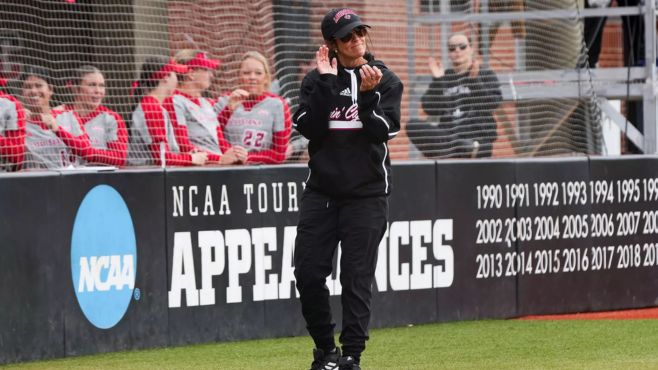
This weekend, the NCAA Division I Softball Tournament will begin with 16 Regionals around the country. For just the third time since 1990 (36 years ago), the Louisiana Ragin’ Cajuns will not be apart of one of those Regionals.
The Ragin’ Cajuns softball program was built into a powerhouse over the course of the last three decades. Within that time frame, they have made 33 Regionals, eight Super Regionals, and six Women’s College World Series. The program has also taken home 22 Sun Belt Titles since the year 2000.
It is important to note some of the factors that led to this incredibly long, sustained run of success.
Needless to say, the softball culture at UL runs deep. The program made a commitment to the sport long before many others did. They were even the first school to broadcast every game on commercial radio.
The emphasis that UL placed on softball undoubtedly gave them an advantage. They created a culture that cared, built a dedicated fan base, and made Louisiana Ragin’ Cajuns softball a nationally ranked, name-brand program that players wanted to play for.
In addition, without many of the modern changes to collegiate athletics, playing for a well-developed, name-brand program that was committed to winning and had a dedicated following was one of the main reasons players considered going anywhere. Through this, the Cajuns attracted some of the best players in the state, and even the country.
In addition to that structure benefitting Louisiana, sustained stability was also a major factor.
The program has only had five head coaches since its inception, and two of the five were co-head coaches for the majority of their tenure. Yvette Girouard was in charge for two decades, the Loteifs from 2001-2017, Gerry Glasco from 2018-2024, and Alyson Habetz ever since. Every coach prior to Habetz has won 300 or more games before departing.
So now that we have established some of the background behind the success of this program, let’s dive into what’s happened since Habetz took over.
For one, she inherited a roster that was gutted before she took over. All-American Mihyia Davis, Lauren Allred, Victoria Valdez, Alexa Langeliers, and ace pitcher Sam Landry all departed, leaving a shell of the former team. While the comparison can be made to when Glasco took over in 2018, it is not a fair one.
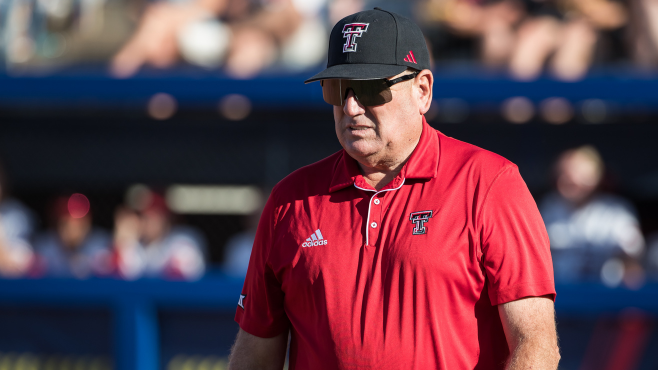
Glasco was an active assistant at an SEC program. He had been running a massive travel ball organization decades prior. He still had an active role in recruiting, and had those relationships built to immediately bring players in.
For Habetz, she spent the year prior to taking the UL job away from the game, caring for family. While those connections still existed, she was farther away from any of them and had to rebuild her recruiting base, all while putting together a new coaching staff.
In addition, we would later find out that her initial coaching staff, let’s just say, was not always aligned and headed in the same direction as Habetz.
The Sun Belt Conference has also come along way and continued to progress since Habetz arrived. In Glasco’s last two seasons (2023 & 2024), the conference had two and one non-UL team respectively finish in the RPI Top 50. This season, there are four.
These might sound like excuses, but in reality, they are factors. Situations like this require all the factors to be evaluated, which is incredibly hard to do.
While the Cajuns’ fall-off feels sharp and severe, it might not be as far off as it feels. For instance, Louisiana finished 53rd in the RPI last season and currently sit at 52nd this season. Given the 308 teams that play Division I softball, UL still finished the season ranked ahead of 83% of the country.
I’m not here saying that the Cajuns are poised to return to the glory years and be perennially ranked in the Top 25 and playing in Regionals for the next decade. Truthfully, I don’t know if that will be the case.
What I do know is the playing field might not be more level, but it’s different. Players can be paid now, and UL certainly is not loaded on extra cash at the moment. Glasco went to Texas Tech and was able to pay $1,000,000 to one pitcher. That is not happening anywhere in the Sun Belt, and definitely not at UL anytime soon.
A sport that was once tilted all the way in the Cajuns’ favor is now looking much more level, even within the conference. On a national scale, UL once had nearly every advantage that power conference schools had. Softball was an exception within the framework, where the Cajuns operated like a power conference school. Now, they are punching up in weight class just like in the majority of sports.
Despite that, advantages still exist. Louisiana nearly doubled the average attendance of anyone else in the Sun Belt Conference. They rank near the top of the nation in this statistic nearly every year.
Most coaches are tasked with building a program to a level of sustainability and then later striving for greatness. Cajuns’ softball and Habetz get to skip that step. It is sustainable, the fan base is dedicated, and the facilities are built. It is now about using any extra energy and resource to strive for greatness once more.
I don’t know for sure if Louisiana softball is returning to glory soon. But I do know that it’s far too early to give up on it.
Dawson Eiserloh is the host of “The LohDown with D-Loh” which is broadcast weekdays (1-3 PM) on ESPN 103.7 Lafayette and 104.1 Lake Charles — Southwest Louisiana’s Sports Station